
When auditors began documenting his estate, they ran into an unexpected problem —
he had left no will.
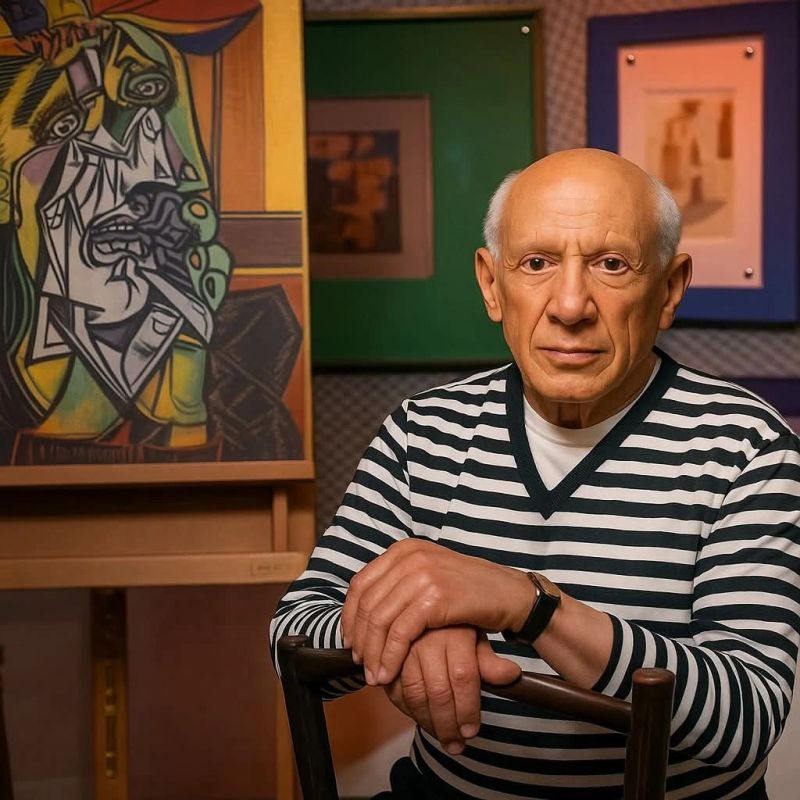
What they did find was staggering:
• 45,000 works of art
• Castles
• Estates
• Cash
• Assets worth $250 million at the time — equal to several billion dollars today
Picasso was likely the wealthiest artist in history, a multimillionaire long before his death.
And yet… he lived like a poor man.
He wore simple striped shirts.
Ate modest Mediterranean meals.
Worked in cluttered, dusty rooms filled with canvases and chaos.
One of his most famous lines sounds like a paradox:
“I wanted to live like a poor man — with lots of money.”
But it wasn’t a contradiction.
It was a strategy.
In the mindset of the average person, wealth means complication:
gold-plated toilets, huge mansions, luxury cars.
But houses require upkeep.
Yachts require a crew.
Status comes with endless social obligations.
Wealth, instead of creating freedom, often creates chains.
It demands attention.
When skyscrapers began blocking the view from his villa in Cannes (La Californie), Picasso didn’t sue, complain, or fight the developers.
He simply called his agent and bought another home —
the Château of Vauvenargues, an empty, quiet castle with bare walls perfect for his paintings.
No parties. No extravagance. Just space and silence.
To him, “living like a poor man” meant having as few obligations as possible.
A poor man doesn’t waste time maintaining assets — because he has none.
Picasso used money to eliminate survival stress,
but kept the simple lifestyle of someone who owns little —
so he could focus on his work.
He wasn’t an ascetic.
He simply understood a truth most people never learn:
Everything you own demands a piece of your attention.
And attention was his most precious resource.
We often confuse “standard of living” with “standard of consumption.”
For Picasso, his true standard of living was measured by the hours he could spend painting, uninterrupted by the administrative chaos that great wealth usually brings.
He used capital to build a bubble around himself —
a bubble where he could create.
In today’s Instagram era, success means showing off.
But Picasso believed real wealth isn’t the size of your possessions —
it’s the minimum amount of attention those possessions demand from you.
It’s not about how much you have.
It’s about how little of your life it consumes.
Brought to you by David Dor

 Thought for the Day…12/05/25