
The second-warmest June
|
|
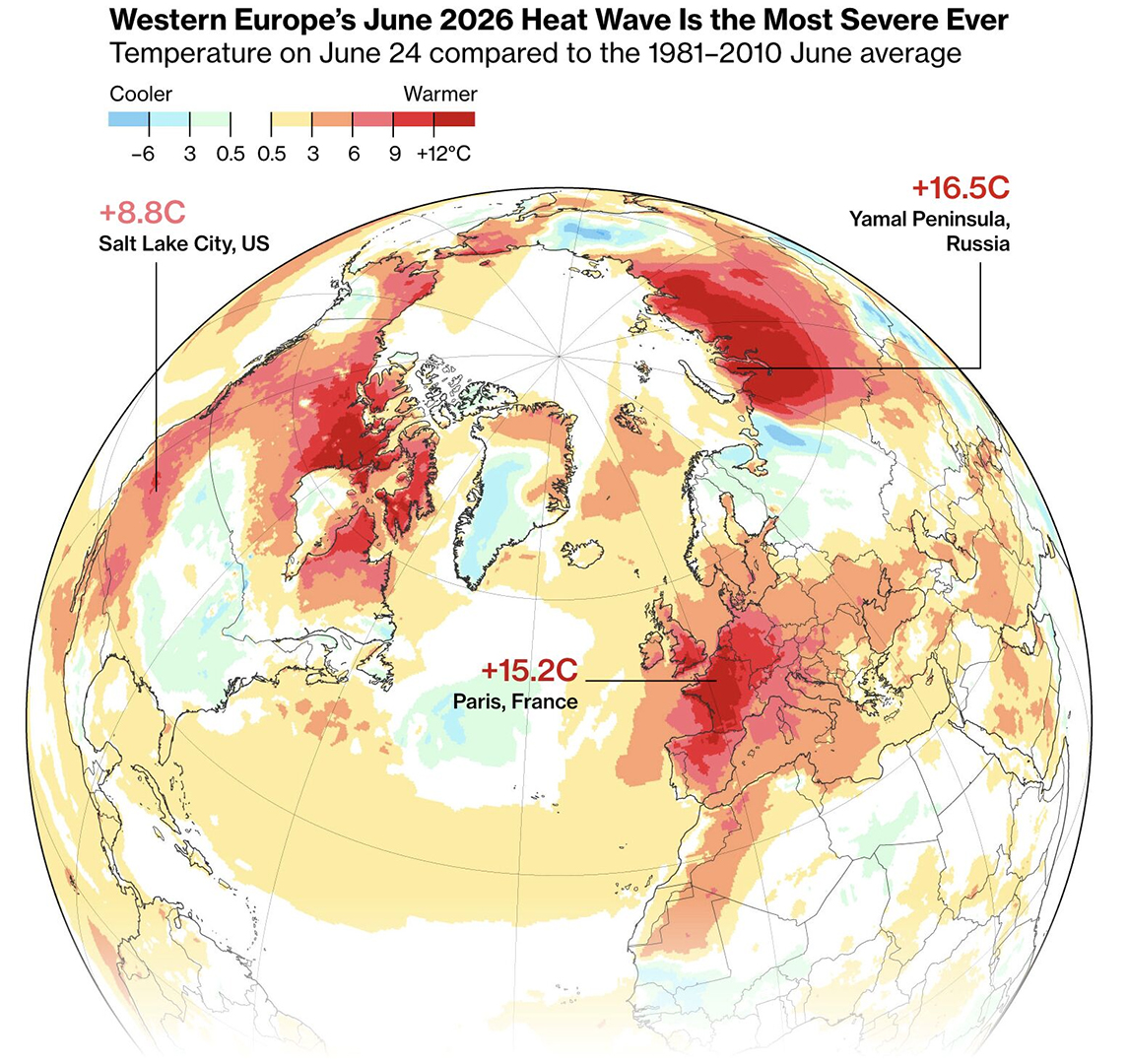
At 1.39°C above the estimated pre-industrial average, June 2026 continued the recent run of exceptional global heat, according to Copernicus. More concerning, Earth’s energy imbalance, the gap between the energy the planet absorbs and the heat it radiates back into space, has roughly doubled over the past two decades. This means the climate system is accumulating heat faster. Scientists are now investigating whether the rate of global warming itself is accelerating and what that could mean for future climate extremes. |
A Dangerous Heatwave Is Also
|

https://r.sib.wedonthavetime.org/mk/cl/f/sh/7nVU1aA2nfsTSsDeddNLnk3ps7yyzsf/VNexDNLK4GNv
|
Another dangerous heatwave is unfolding across the ocean, mostly out of sight. The ocean covers about 71% of our planet. Seen from the Pacific side, Earth appears to be almost nothing but water. For decades, this vast blue surface has absorbed more than 90% of the excess heat trapped by greenhouse gases, shielding us from even more intense warming on land. Now the ocean is breaking heat records, and a strengthening El Niño is forming over exceptionally warm seas. In this deep dive, We Don’t Have Time founder Ingmar Rentzhog explains how stored ocean heat can return to us as extreme weather, shifting rainfall, deepening droughts, fuelling heavier downpours and disrupting storm patterns around the world. The story also explores what rising ocean temperatures mean for coral reefs, fisheries, sea-level rise, oxygen loss and the billions of people whose lives depend on a healthy ocean. It is an unsettling read, particularly for anyone who has not closely followed what is happening beneath the surface. But it is not without solutions. We can still limit how much more heat enters the ocean by ending fossil fuel emissions, rapidly cutting methane, protecting marine ecosystems and strengthening the systems that monitor our changing seas. Read the long read in Forbes, and please share it with your network. The ocean has bought us time. What we do now will determine whether that time was wasted. |
|||
|
|||
|
|||
|
|||
| | |||
Fossil Fuel Answer To The Heatwaves:
|
https://r.sib.wedonthavetime.org/mk/cl/f/sh/7nVU1aA2ng01QyEsXuJ9xBL4XZy7xej/UhtC8C47mg0k
|
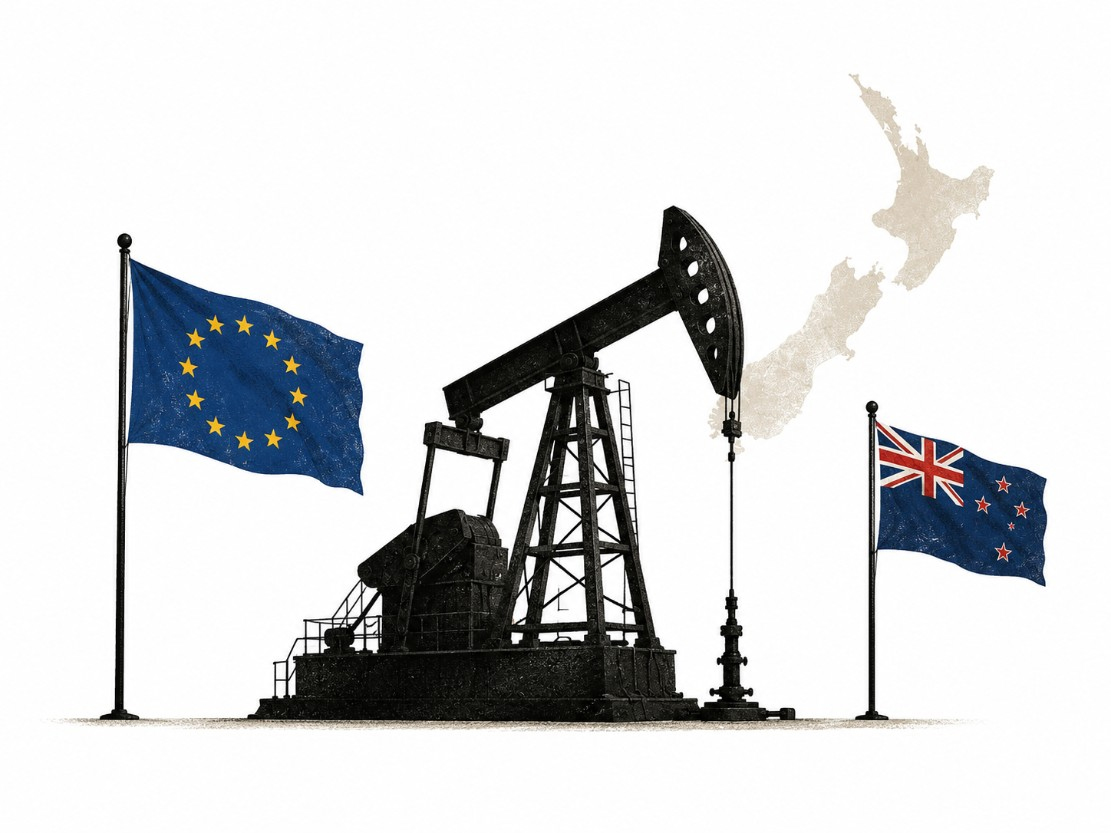
The heatwaves above are not abstract warnings. They are the cost of fossil fuel pollution, measured in lost lives, failed harvests and rising insurance bills. The fossil fuel answer? Not to stop the pollution. To rewrite the rules so no one can touch them. Two rewrites are happening right now. One in New Zealand, one in the EU. Both can still be stopped, and you have days, not weeks, to act. Rewrite 1: Make polluters unsueableNew Zealand is considering a bill that would block climate lawsuits against major emitters. It could kill the groundbreaking case brought by Māori elder Mike Smith against Fonterra and other large polluters, even after the Supreme Court ruled it should proceed. People would still suffer the floods and fires. The companies behind them would sit beyond the reach of any court. ⚠️ You can stop this before July 13. Anyone, anywhere in the world, can submit to New Zealand’s Justice Committee. It takes five minutes. Ask it to reject the Climate Change Response (Tort Liability) Amendment Bill. |
|||
|
|||
Rewrite 2: Relabel oil expansion as “transition”On Wednesday, July 15, MEPs on the European Parliament’s economic affairs committee ECON will vote on whether oil and gas expansion can qualify under the EU’s “transition” finance label. If the proposal is adopted, a company opening new oil and gas fields could carry a green “transition” investment label, as long as 20% of its spending goes to green activities. Read the full story. ⚠️ You can stop this before July 15. If you live in the EU:
If you live outside the EU: Share the article on your social media feed and write to the two people leading this file: rapporteur Gerben-Jan Gerbrandy and ECON chair Aurore Lalucq. You can find their emails the same way. |
|||
|
|||
|
|||
|
💚 Two rewrites. Two deadlines. Five minutes of your time for each. Untouchable only works if we let it. |
|||
|
|||
The cleanest energy is the energy we never need to use |

https://r.sib.wedonthavetime.org/mk/cl/f/sh/WCPzyXJTZ7QWD2bxUTgmEMORXSZteckb/bAv4VOdPFcef
|
Missed the IEA’s Global Conference on Energy Efficiency? Now you can catch the highlights on demand. Over two days in Montreal, We Don’t Have Time brought together global leaders, policymakers and industry experts to tackle one of the biggest untapped opportunities in the energy transition. Why is implementation still lagging behind ambition? What’s holding back electrification? Which financing models are finally unlocking projects at scale? These conversations get straight to the heart of the challenges—and the solutions. Energy efficiency is often called the first fuel: the fastest, cheapest and most overlooked way to cut emissions, lower costs and strengthen energy security. These sessions show why. |
|||
|
|||
|

 At 100, Dick Van Dyke Credits One Habit For His Long Life. Studies Link It to 15% More Years