
Dear Friends,
I had the honor of delivering the 4th FW de Klerk Annual Memorial Lecture in Cape Town, South Africa last week.
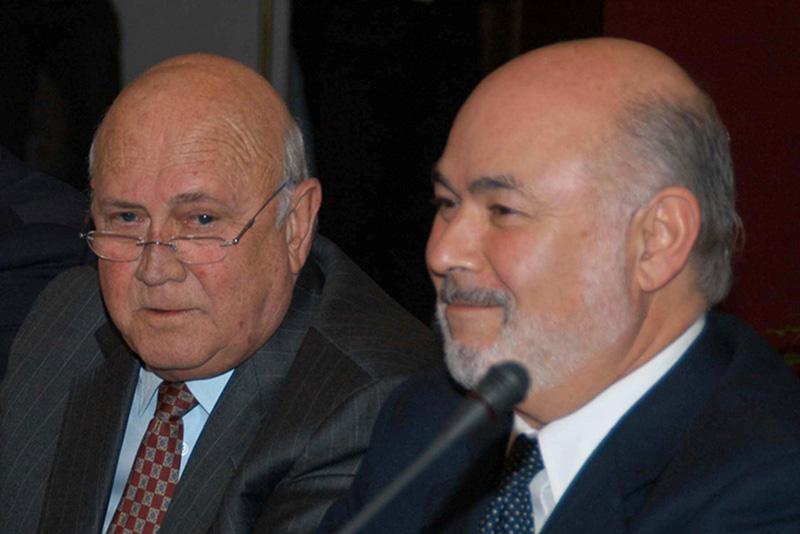
I was privileged to work with former South African President FW de Klerk at numerous Summits of Nobel Peace Laureates, an organization founded by President Mikhail Gorbachev which convenes Peace Laureates at extraordinary conferences on a regular basis and with which I am honored to serve as its Representative to the United Nations. I draw your attention to the Final Declarations, which contain expressions of collective wisdom and practicality. President de Klerk’s contributions were always substantive, terse, and clear.
We traveled together on a delegation hosted by Bahrain which the Global Security Institute helped coordinate. He demonstrated courage in his work to help end apartheid in South Africa and I observed his humility, and warmth wherever he went.
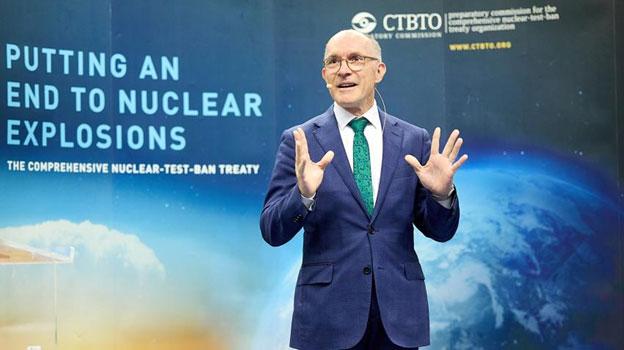
Ambassador Thomas Graham, a member of GSI’s Board of Directors was instrumental in the creation and signing of the Comprehensive Test Ban Treaty as the lead diplomat for the United States on the issue. His historic analysis is essential reading for anyone serious about understanding its creation and importance. The Treaty’s relationship to the stability of the nonproliferation regime and the Nuclear Nonproliferation Treaty is the focus of an in-depth, but short, study by the European Leadership Network.
President Clinton’s characterization of the Treaty is succinct and accurate… “I was honored to be the first of 146 leaders to sign the Comprehensive Test Ban Treaty, our commitment to end all nuclear tests for all time — the longest-sought, hardest-fought prize in the history of arms control. It will help to prevent the nuclear powers from developing more advanced and more dangerous weapons. It will limit the possibilities for other states to acquire such devices… Our common goal should be to enter the CTBT into force as soon as possible, and I ask for all of you to support that goal.” Note also quotes from Presidents Eisenhower and Kennedy on the subject.
You might also enjoy my thoughts regarding the recent apparent order by President Trump to resume nuclear testing and U.S. votes on this subject in the UN General Assembly, addressed in a syndicated article by the Inter Press Service. My quotes are outstanding in their unique grammatical awkwardness, unnecessary loquaciousness, exemplifying an overly pedantic series of run-on sentences, which in summary strongly urge against the resumption of testing and emphasize the need for cooperation to address an abundance of threats to us all.
On 21 November, I will address the third Annual Digital Power of Women Conference. This distinguished event powerfully advances much-needed gender balance. I hope you can join virtually.
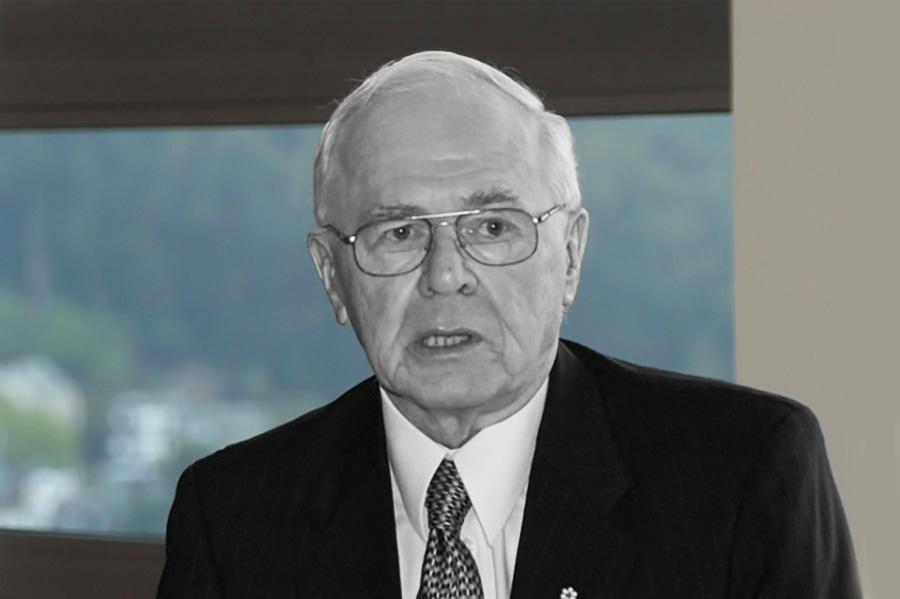
GSI Advisory Board Member Honorable Douglas Roche’s very personal article Creative Dissent: A Politician’s Struggle for Peace merits a serious quiet read. It is inspiring because it reveals the character of one of the most effective, wise, and passionate advocates for nuclear disarmament and human security of our time.
With Respect,
Jonathan Granoff,
President, Global Security Institute
EVENTS
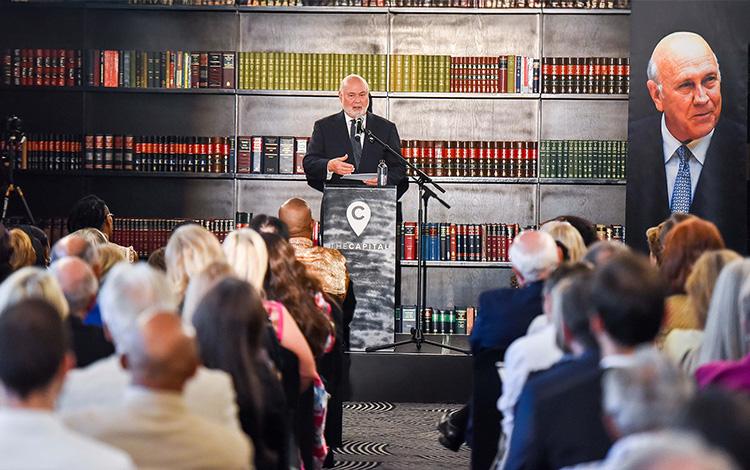
Jonathan Granoff Delivers Keynote at Fourth FW de Klerk Memorial Lecture |
|
|
|
|
|
On 11 November 2025, the FW de Klerk Foundation, in collaboration with the Konrad-Adenauer-Stiftung, hosted the Fourth FW de Klerk Memorial Lecture, to commemorate President De Klerk’s legacy.
The Foundation hosted Jonathan Granoff, President of the Global Security Institute, as the keynote speaker, who delivered a lecture on: “FW de Klerk’s Commitment to Justice: Transformation, Constitutionalism and the Abolition of Nuclear Weapons”. In his lecture, Jonathan reflected on his many meetings with Mr De Klerk at World Summits of Nobel Peace Laureates, some of Mr De Klerk’s greatest achievements — such as initiating South Africa’s constitutional transformation, abolishing South Africa’s nuclear arsenal and making South Africa a leading member of the Nuclear Non-proliferation Treaty. |
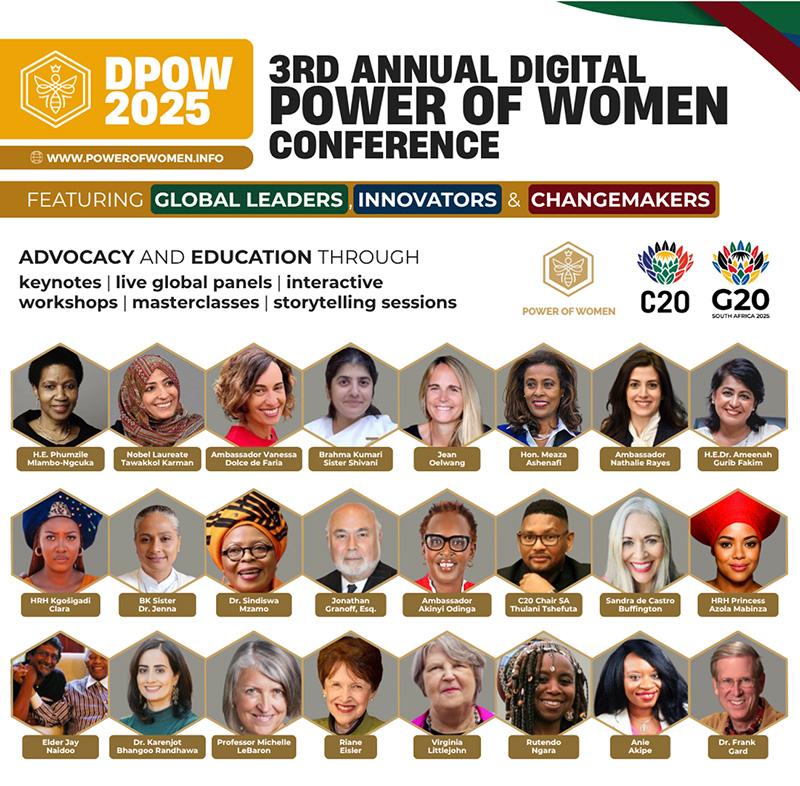
Keynote by Jonathan Granoff: “Threading the Golden Rule Across Religions” |
|
|
|
|
|
November 21, 2025
At a time when division often overshadows shared humanity, returning to the core ethical teachings that unite us becomes essential. Across every faith tradition, one principle shines through: treat others as you wish to be treated. This universal truth, known as the Golden Rule, has guided moral thought, shaped civilizations, and anchored our deepest spiritual traditions.
The Digital Power Of Women (DPOW) 2025 Conference — an official Civil20 and G20 Social South Africa digital event will explore how the Golden Rule functions as a moral through-line across religions and why it remains a relevant framework. Jonathan’s message will invite leaders, youth, and communities to recognize that the values uniting us are far more powerful than the differences dividing us.
This keynote is part of the 3rd Annual Digital Power Of Women Conference, convening global leaders, innovators, social-impact changemakers, movement builders, and youth from across continents to imagine and build a future rooted in balance, respect, and collective peace & wellbeing.
|
|
|
|
|
| FROM THE BOARD OF ADVISORS |
Creative Dissent: A Politician’s Struggle For Peace |
|
|
|
|
|
On October 23, 2025, Global Security Institute Advisory Board Member, the Hon. Douglas Roche O.C., received an award from the Canadian Leadership for Nuclear Disarmament (CLND) for Distinguished Achievement in Nuclear Disarmament. It was followed by a lecture given by Mr. Roche titled Creative Dissent: A Politician’s Struggle for Peace. |
|
|
|
|
|
|
|
| ANALYSIS |
|
|
|
|
|

|

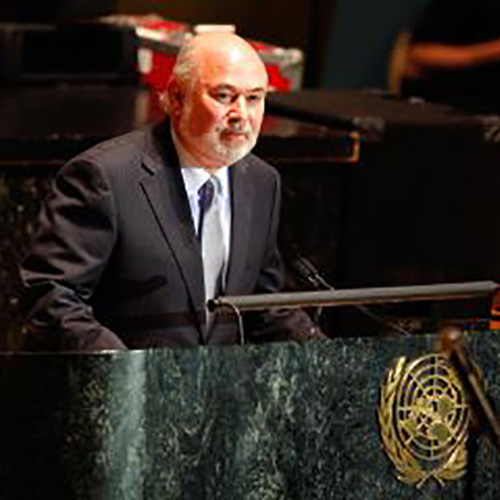
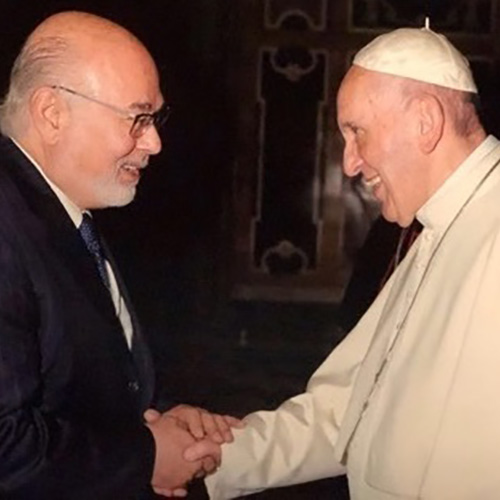
 Dr. David Weill, author of TELL ME I BELONG: A Journey Across Faiths and Generations (Union Square & Co.; December 9, 2025)